The Hitachi Global Foundation publishes news letters featuring its many activities. We offer various types of news about our Foundation, ranging from activity reports on symposiums, seminars, awards ceremonies, and other events to our latest topics. Please take a look to find out more.
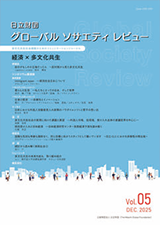
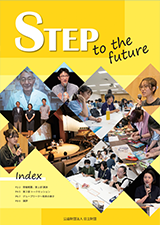
The Global Society Review serves as a platform for experts in academic fields related to inclusion to organically interact and share their expertise with one another, thereby contributing to foster new academic ideas and perspectives. The journal also aims to making inclusion an issue that is familiar to the general public. The fifth issue, published in December 2025, is themed "Economy x Inclusion." It includes lecture texts, papers, and roundtable discussions from a symposium that was held in June and draws on the knowledge and experience of people from a wide range of fields.
Preface Teruya Suzuki, The Hitachi Global Foundation
This fifth issue examines the present and desired state of an inclusive society in Japan from multiple angles. If you encounter a foreign national in your neighborhood who seems to be in need, take a step forward and listen—even if it is in Japanese. Equally important is an attitude of trying to understand the individual, including cultural background. At times, explaining Japan’s rules and customs with care can also help build a better society for all. I hope this issue offers readers prompts for reflection and practical insight, even in a small way.
If You Were in Their Shoes - Inclusion Seen From the Other Side
Working as Staff United by a Common Goal—Across Nationality, Gender, and Age
What Statistics Tell Us about Immigrant Society (5)
Initiatives Shaping the Future of Multicultural Coexistence
In August 2025, a roundtable discussion was held at Hitachi Global Life Solutions, Inc., bringing together employees with foreign roots and their supervisors. Participants spoke about their workplace experiences, what they find rewarding, and their goals for the future. Details are featured in Global Society Review, Vol. 5.


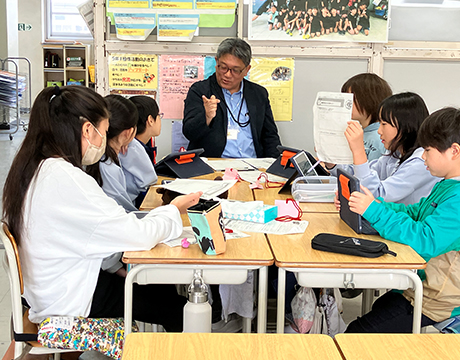
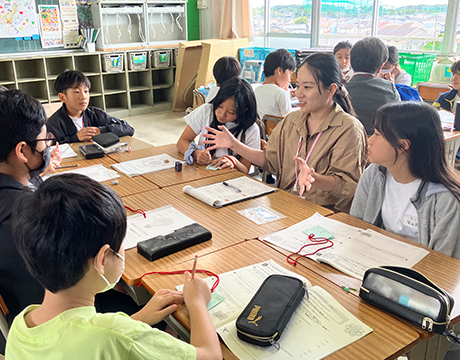
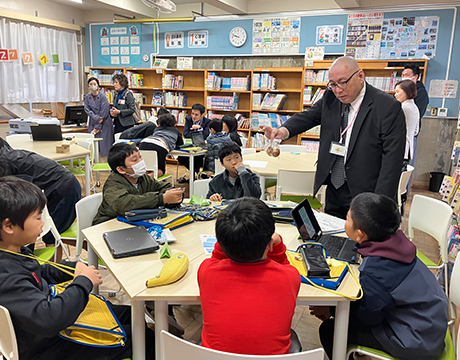
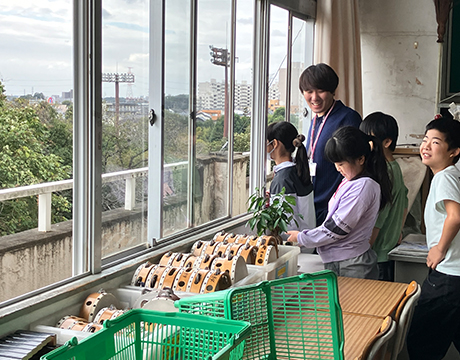
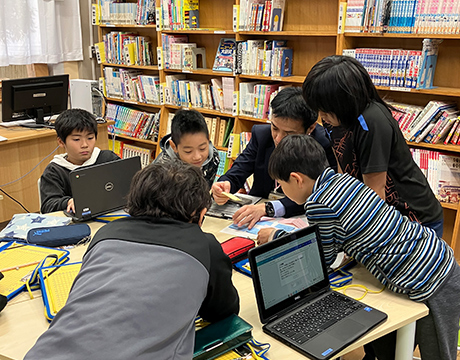
To nurture the problem-finding and problem-solving skills expected of future science and engineering talent, the Hitachi Global Foundation runs a project-based inquiry program for fifth-grade students. In collaboration with Hitachi Group companies, we deliver four on-site lessons per school. In FY2025, seven schools are participating: Uehara Elementary School (Shibuya, Tokyo); Makado Elementary School (Yokohama, Kanagawa); Chikumazawa Elementary School (Miyoshi, Saitama); Hikarigaoka Elementary School, Tomise Elementary School, Tomise Nishi Elementary School (Kashiwa, Chiba); and Matama Elementary School (Bungotakada, Oita).
October 28, 2025 Makado Elementary School
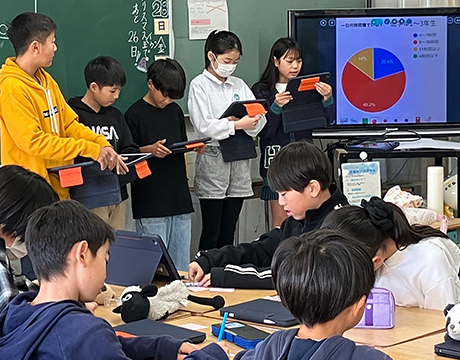
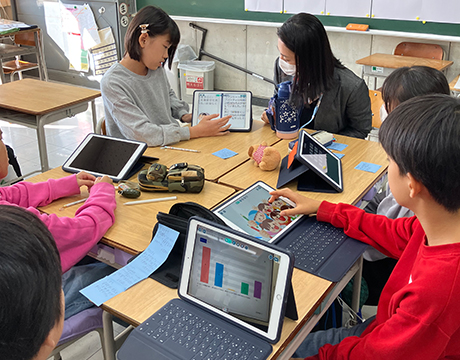
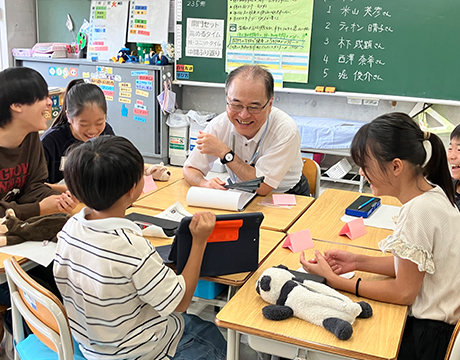
November 13, 2025 Tomise Elementary School and Tomise Nishi Elementary School
The event report for “Designing the Future of Science and Engineering — Our Vision for Society 10 Years from Now,” held on Monday, July 21, 2025, at the National Museum of Emerging Science and Innovation, is now available on the Hitachi Global Foundation’s website. We encourage you to take a look.
The Hitachi Fund Support for Research Related to Infectious Diseases supported evidence-based academic studies that examined issues revealed during the response to COVID-19 and shared the findings internationally. Over a three-year period beginning in December 2021, five research projects were conducted, all of which are now complete. We have published a report summarizing the results.
Launched in FY2020, the Hitachi Global Foundation Asia Innovation Award promotes science, technology, and innovation that address social challenges and advance a sustainable future across the ASEAN region.
The program honors individuals and groups whose research and development projects articulate a forward-looking vision for society, integrate concrete plans for real-world implementation of science and technology, and generate outcomes that demonstrably serve the public interest while contributing to the United Nations Sustainable Development Goals (SDGs).
In FY2025, nominations were invited from 26 universities and research institutes across six ASEAN countries—Indonesia, Cambodia, Laos, Myanmar, the Philippines, and Vietnam—for research and R&D achievements contributing to one SDG goal and one target selected by each applicant. Following a rigorous review process, 13 awardees were selected.
The award ceremony was held in Jakarta, Indonesia, on January 16, 2026. The Foundation published summaries of the 2025 awardees and their research on its website at the end of January.
Goal12
Ensure sustainable consumption and production patterns
Goal9
Build resilient infrastructure, promote sustainable industrialization and foster innovation

Goal2
End hunger, achieve food security and improved
nutrition and promote sustainable agriculture

Goal6
Ensure availability and sustainable management of water and sanitation for all
Goal11
Make cities and human settlements inclusive, safe, resilient and sustainable

Goal3
Ensure healthy lives and promote well-being for all at all ages
Best Innovation Award 3 million yen
Geothermal Beyond Energy: Circular Mineral Recovery for Clean and Green Futures
Country:Indonesia
Affiliation:Gadjah Mada University
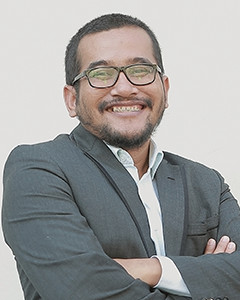
Name:Dr. Himawan Tri Bayu Murti Petrus
The awardee developed a clean technology to recover high-value products from geothermal brine. Commercialization of silica and boron compounds is underway, and lithium extraction is being piloted. The approach improves resource efficiency, reduces waste, and creates green jobs in local communities.
12.2
Outstanding Innovation Award 1 million yen
From Pollutants to Protein: Sustainable Bioremediation for Health and Food
Country:Indonesia
Affiliation:Sepuluh Nopember
Institute of Technology
Name:Dr. Adi Setyo Purnomo
6.3
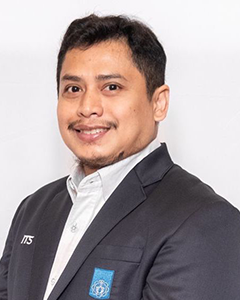
The awardee developed a sunlight-powered device that combines bacteria with a TiO2 photocatalyst to treat toxic batik wastewater, achieving over 90% decolorization and up to 50% cost reduction. Treated water and by-products are reused for mushroom cultivation, creating new value for rural communities.
Thermomechanical and Computational Design for Reliable Semiconductor Packaging
Country:Philippines
Affiliation:De La Salle University
Name:Dr. Aristotle Tulagan Ubando
9.1
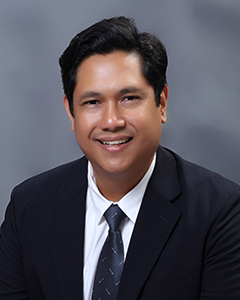
Playing a central role in the government-supported Thermomechanical Analysis Laboratory (TALa), the awardee advances collaboration with semiconductor companies. Using FEA solutions, TALa reduces prototyping cost and time, optimizes design, and improves quality—while contributing to the training of highly skilled engineers.
Smart Gas Sensor for Early Detection of Toxic Gases to Protect Health and Environment
Country:Vietnam
Affiliation:Hanoi University
of Science and Technology
Name:Dr. Manh Hung Chu
11.6
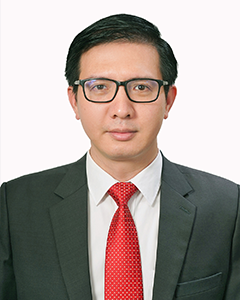
The awardee developed a low-power smart sensor capable of accurately identifying multiple hazardous gases at room temperature, with AI-enabled real-time analysis. The technology shows strong potential for safety and environmental applications and has led to over 90 publications and patents, as well as a national science and technology award.
Quantum and AI Optimization for IC Design: Accelerating Semiconductor R&D in Vietnam and Beyond
Country:Vietnam
Affiliation:Ho Chi Minh City
University of Technology
Name:Dr. Trang Hoang
9.5
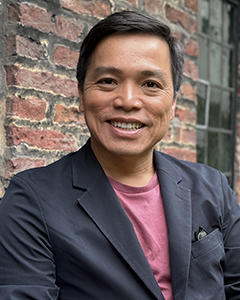
The awardee developed an optimization platform for analog IC design leveraging AI and quantum technologies. The platform shortens design cycles and improves energy efficiency, has been granted a U.S. patent, and is being adopted in academia—enabling students and companies in developing countries to work on advanced IC design and helping to spur innovation in Vietnam and elsewhere.
Encouragement Award 500,000 yen
From Full-Fat Soybeans to Alternative Meat: Sustainable Protein through Single-Screw Extrusion and Local Partnerships
Country:Philippines
Affiliation:University of
Affiliation the Philippines, Los Baños
Name:Dr. Floirendo Pantas Flores
2.3
Utilizing Rice Distiller By-Products to Improve Productivity and Reduce Environmental Impact of Local Cattle in Lao PDR
Country:Laos
Affiliation:Souphanouvong University
Name:Assoc. Prof. Dr. Sangkhom Khom Inthapanya

2.4
Development of Organic Fertilizer and Biochar Using Agricultural Wastes and Aquatic Plants
Country:Vietnam
Affiliation:Hue University
Name:Prof. Dr. Hoa Thi Thai Hoang
12.2
Graphene-Based Nanomaterials Synthesized from Steelmaking Waste for Advanced Environmental and Industrial Applications
Country:Vietnam
Affiliation:Hanoi University
of Science and Technology
Name:Dr. Tan Thi Vu
12.4
Enhancing Rice Productivity and Promoting Sustainable Agriculture through Beneficial Microbes
Country:Cambodia
Affiliation:Institute of Technology of Cambodia
Name:Dr. Kakada Oeum
2.4
Development of Advanced Immuno-Nanomedicine and Vaccine Platforms to Improve Public Health
Country:Vietnam
Affiliation:Ton Duc Thang University
Name:Dr. Viet Quoc Le

3.b
Sustainable Manufacturing of Functional Nanomaterial-Based Sensors for Energy, Health, and Environmental Monitoring
Country:Indonesia
Affiliation:Sepuluh Nopember
Institute of Technology
Name:Dr. rer. nat. Ruri Agung Wahyuono
9.5
Green Analytical Methods for Rapid Assessment of Food Safety, Authenticity, and Functional Quality in Diverse Food Systems
Country:Indonesia
Affiliation:Gadjah Mada University
Name:Dr. Widiastuti Setyaningsih
3.4
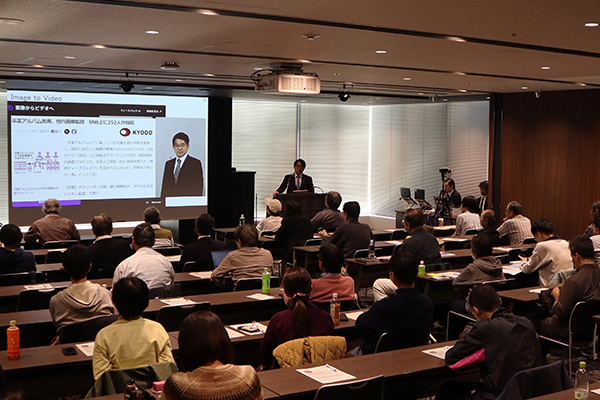
On Saturday, November 15, 2025, the 21st Hitachi Global Foundation Science and Technology seminar was held in a hybrid format at Kudan-Kaikan Terrace (Chiyoda, Tokyo) and via Zoom Webinar. We welcomed Professor Isao Echizen—one of Japan’s leading researchers on fake media—from the National Institute of Informatics (Information and Society Research Division). He provided a clear overview of the threats posed by advances in generative AI and the latest countermeasures.
Professor Echizen specializes in multimedia security, privacy protection, and information security, with a particular focus on deepfake detection and technologies to prevent privacy violations. He has an extensive record of achievement, including numerous patents in Japan and overseas.
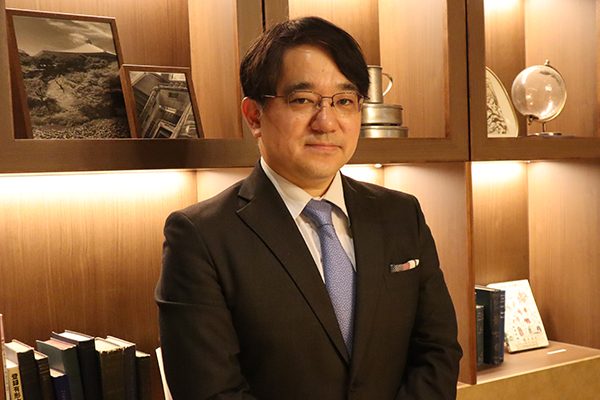
The Progress and Risks of Generative AI Capable of Producing Highly Realistic Faces and Voices
Generative AI is being applied across fields such as entertainment and communications. At the same time, cases have emerged in which fake images and audio are generated to facilitate impersonation or manipulate public opinion—an escalating societal concern worldwide. In the seminar, Professor Echizen presented recent case studies, and explained methods for producing face-targeted fake media (deepfakes) and state-of-the-art detection and protective technologies against it.
He concluded with this message: “Responsibility for AI-generated content rests with its creator. Please cultivate sound judgment through education and use these technologies accordingly.” Participant feedback included comments such as, “The more advanced AI becomes, the more knowledge users need,” and “It is reassuring to know Japan is researching technologies to protect against fake media.” An on-demand archive of the session is available on the Foundation’s official YouTube channel. Access is limited to those who apply.
Application for archive viewing
The Hitachi Global Foundation publishes a newsletter three times a year (November, March, and April), featuring activity reports from seminars, symposiums, award ceremonies, and the latest topics.
If you would like to receive the digital edition of our newsletter, please sign up using the registration form.
